From the founder ·
Why I Built Marejada
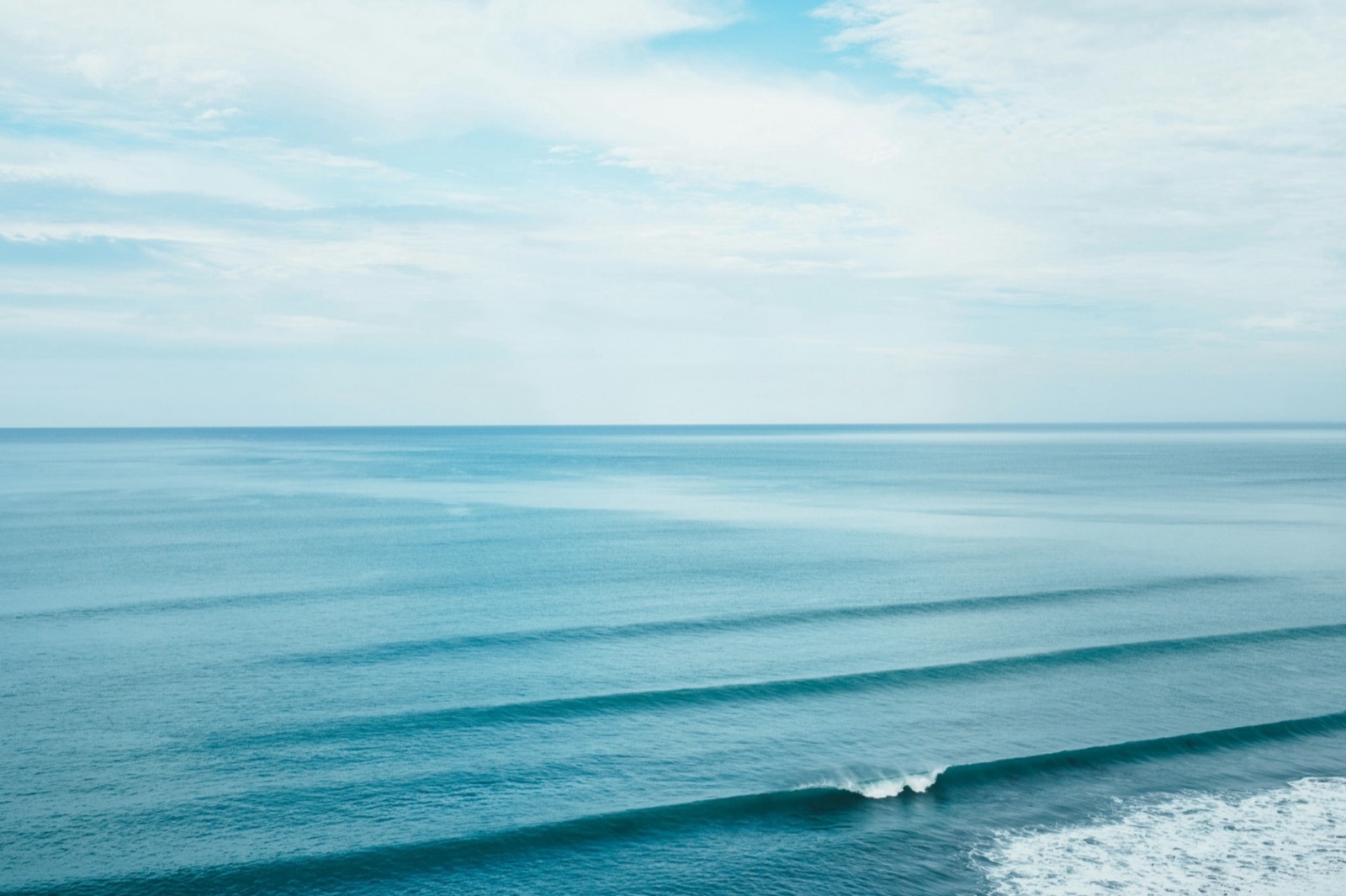
In my twenties, I could surf ten sessions a week. I'd push through injuries, go out drinking the night before, eat whatever was convenient, and wake up ready to paddle out again. I felt invincible. I didn't spend much time thinking about taking care of my body because, for the most part, I didn't have to.
That's changed.
What's interesting is that as I've gotten older, surfing has only become more important to me. It's more than exercise or recreation. It's how I connect with the ocean, with nature, and with myself. It's how I decompress, clear my head, find energy, and experience something that's increasingly hard to find in everyday life.
There's a certain joy in surfing that's difficult to explain to someone who hasn't experienced it. The combination of anticipation, uncertainty, movement, and being completely immersed in the moment. The stoke.
It's become a fundamental part of who I am. And the more I've come to appreciate it, the more determined I've become to protect it. Unfortunately, my body hasn't always cooperated.
The problem wasn't motivation
Over the years, I've accumulated my share of injuries. Some from surfing, some from other sports, and some from simply getting older. Injuries are part of life. Not all of them are preventable, especially in a sport as dynamic and unpredictable as surfing.
But there's a difference between accepting injuries as a reality and accepting that there's nothing we can do to prepare for them, manage them, or recover from them more effectively.
I've spent countless hours researching rehabilitation protocols, mobility exercises, strength programs, and recovery techniques. I'd find an exercise that looked promising, piece together a routine, and work through it. Then the next injury or limitation would come along, and I'd start the process all over again.
Most of these routines were used once and forgotten. They weren't recorded in any useful way, and they never adapted to whatever else was happening with my body. I was spending an enormous amount of time just figuring out what to do.
And then there's the rehabilitation itself. Anyone who's spent weeks doing the same mobility drill or strengthening exercise knows how mind-numbing it can become. The athletes who get back out there are often the ones willing to push through that monotony.
But why does it have to be so monotonous? Why couldn't a training system introduce variety while still working toward the same physical objectives?
I kept thinking there had to be a better way.
Surfing doesn't work on a schedule
One thing I've never understood about traditional fitness programs for surfers is how little they account for actual surfing. A typical workout program tells you to train on Monday, Wednesday, and Friday.
But what if the waves are firing on Tuesday and Wednesday? What if the swell arrives a day early? What if you've already surfed three demanding sessions and your shoulders are exhausted?
The ocean doesn't care about your gym schedule.
Tides change. Winds shift. Swells arrive and disappear. Some weeks you surf constantly. Other weeks you barely get wet.
Surfing is the priority. Training is supposed to support it. That distinction is fundamental.
I wanted something that could consider the surf forecast alongside my physical condition, injury history, fitness level, and recovery needs. Something that could make intelligent decisions about when to train hard, when to work on mobility, when to recover, and when to simply go surfing. A system that moves with the ocean rather than asking surfers to organize their lives around a static workout plan. That became one of the foundations of Marejada.
The science of staying ready
I've always believed that physical preparation makes a difference. Throughout my athletic life, I've experienced how strength, conditioning, mobility, and consistent training affect performance. You can't expect to spend weeks on the couch, jump into demanding conditions, and perform at your best.
Surfing is an athletic endeavor. It demands strength, endurance, balance, coordination, mobility, and the ability to react to constantly changing forces.
And we're not just surfers. Many of us run, lift, cycle, play other sports, and accumulate physical wear and tear along the way. Our bodies don't experience those activities in isolation.
Marejada grew from the idea that good performance training should account for the whole athlete. That means applying established principles like progressive overload, periodization, and recovery, while recognizing that each surfer has different strengths, limitations, injuries, and goals.
It's also about making the necessary work more engaging. If you can introduce variety into a mobility or strengthening program without losing its purpose, why wouldn't you? If you can make training more interesting, you make it easier to keep showing up. And consistency matters.
The goal isn't to eliminate injuries or promise that every session will be your best. That's not realistic. It's to give ourselves a better chance of being physically prepared when the opportunities come.
Because nothing is more frustrating than watching beautiful waves break while you're stuck on the beach.
A problem with an almost ridiculous number of possibilities
There's another side of Marejada that I find fascinating. I've spent much of my professional life working around data, quantitative analysis, machine learning, and AI. I've always loved mathematical problems, especially those involving enormous numbers and combinations.
Factorials, exponential growth, Graham's number. The kinds of mathematical concepts that stretch the limits of what we can intuitively comprehend. Building Marejada has brought some of that fascination into a problem I genuinely care about.
Think about all the variables involved in deciding what a surfer should do on a given day. The forecast. The likelihood of surfing. How demanding the conditions might be. Recent sessions. Current fitness. Injury history. Recovery. Available equipment. Training goals. Exercise selection. Progression over time.
And then consider how those variables interact. Change one, and the appropriate training decision might change with it. The number of potential combinations becomes enormous.
I love that complexity. But I don't think the surfer should have to deal with it.
The whole point is to take something complicated and make it useful. Instead of researching exercises, juggling schedules, and second-guessing how much training is appropriate, you should be able to open an app and get a plan that makes sense for you. The intelligence should be doing the heavy lifting, not the person trying to get a workout in.
That's the challenge I find so exciting about building Marejada.
Something bigger than an app
When I started thinking about Marejada, I was trying to solve my own problem. I wanted to surf more, manage my injuries better, and spend less time figuring out how to maintain my body.
But the more I worked on it, the more I realized how many other surfers deal with exactly the same things. We all know people who used to surf constantly but gradually stopped. Sometimes life got in the way. Sometimes injuries accumulated. Sometimes their bodies simply couldn't keep up with what they wanted to do.
I'd love to help change that trajectory. My ambition is for Marejada to be useful to every surfer, not just competitive athletes or people who can afford personal trainers and ongoing physical therapy. I want Marejada to be accessible to everyone. The goal is to offer a full year of personalized training for roughly the cost of a single physical therapy session.
Because ultimately, this isn't just about fitness. Surfing is a community. It's a shared experience, a connection to nature, and for many of us, a central part of our identity.
I love surfing. I love what it has given me. And I want other people to experience that for as long as they possibly can.
If Marejada helps someone get back in the water after an injury, feel stronger during a session, or simply enjoy a few more good years of surfing, that's meaningful to me. And if we can build a community around taking better care of ourselves so we can spend more time doing what we love, that's even better.
Marejada started because I was tired of missing good surf.
It's become something much more interesting: an opportunity to help surfers stay healthier, feel better prepared, and keep the stoke alive.
Recover faster. Move stronger. Surf more.